Abstract signal: data points ascending into a single recommendation SIGNAL · CONFIDENCE
Paid search & growth · Toronto

Growth you can actually trust the numbers on.

I help established ecommerce and service brands across Canada and the U.S. acquire genuinely new customers at scale, through Google Ads, Microsoft Ads, and the fast-arriving world of AI-driven discovery. Rigorously. Transparently. With the measurement to prove it.

$0M+/mo
Ad spend managed across senior agency roles
0%+
New-customer acquisition rate
500–0%
Peak ROAS · luxury retailer holiday season
0+ yrs
In paid search and SEM, since 2016
The work

Running ads is the easy part. Knowing the numbers are real is the work.

Paid search rewards the discipline of going one layer deeper: confirming that the "new customers" you're paying for are genuinely new, reconciling reporting tools that quietly disagree, and making sure automated bidding is optimising toward something that matches the business, not just the platform's incentives.

That work, governing a paid media programme you can trust and acting on numbers you've verified, is where I focus. Senior, hands-on strategy paired with the judgement to interrogate a figure before spend scales on it, so the growth you see in the dashboard is growth you can take to the bank.

What I do

Four ways I help brands grow.

Most engagements start with an audit and move into a partnership. Below, in shorthand, is what's typically inside.

01 / four

Paid search strategy & management

End-to-end Google Ads and Microsoft Ads, Search, Shopping, Performance Max, Display, Video, architected around your business model, not a template.

Learn more
02 / four

New customer acquisition

The hardest problem in ecommerce paid media, treated as a deliberate discipline: audience architecture, exclusion management, and bidding calibrated to the value of a genuinely new relationship.

Learn more
03 / four

Landing-page & conversion optimisation

Driving the click is only half the job. I make sure what happens next actually converts, drawing on hands-on experience with the post-click experience so the budget you spend works harder.

Learn more
04 / four

AI-driven discovery readiness

Your customers are starting to search inside ChatGPT, Gemini, and Google AI Mode. I help brands get found, cited, and recommended in that new landscape, early.

Learn more
How I think "
The discipline is making sure the reported number and the real number are the same thing. That habit is what clients say they value most.
A reported figure on the left, the same figure verified on the right AS REPORTED $400K ? VERIFIED $400K Figure illustrative.
A figure is worth what it can survive on closer inspection.

On one engagement, the reported numbers looked healthy, until figures from three reporting tools refused to reconcile and the high-spend narrative didn't match the product-level cart data.

Rather than scale on the convenient version, I paused, asked where the figure had come from, and surfaced the gap to leadership before another budget decision rested on it. Pushing back when a number doesn't survive scrutiny, even with a platform's own reps, is simply how I work.

See the work
Recommendations

What colleagues say about working with me.

Recommendations from managers, peers, and team members across the agencies and brands where I've worked.

"

As a lead for SEM she manages extremely complex Google Ads campaigns, acts as a domain expert for the platform, and provides guidance for the search analysts. In these respects, she's an all-star.

JA
Jamie Armstrong
GM, Media IntelligenceManaged Sade directly
"

An amazing mentor and a super rockstar boss. A 'Search Champ' who supervised more than 12 accounts and 4 team members. She has a rare ability to simplify complex search techniques, making them easier and more interesting for anyone to understand.

BR
Bhavana Radhakrishnan
Performance MarketerReported to Sade
"

Sade is a superstar. An incredible deep-thinker, able and comfortable to explore pathways in her mind. Courageous, strong-minded, warm-spirited, accountable. I'm really proud and grateful to be able to work with her.

TB
Tom Birmingham
Managing DirectorWorked with Sade on the same team
"

One of the most talented, organised, and driven marketers I've had the pleasure of working with. One of Sade's greatest strengths is her ability to go a level deeper with insights, campaigns, and feedback, and get to the 'why' behind the results.

SC
Shaun Crawford
Growth MarketingWorked with Sade
"

A skilled, technical, passionate search expert, driven to achieve the business goals. Great at mentoring her team, not just on the technical aspects of search but on how to approach the campaign with the business objectives at the core.

RL
Robin LeGassicke
Chief Transformation OfficerManaged Sade directly
"

Sade is an excellent mentor, a PPC Ninja, with a strong eye for new industry updates. She is thorough about integrating the art of storytelling into a clutter of numeric reports. A flawless leader who will bring integrity and intelligence to any organisation.

KP
Karan Parikh
Business & Strategy LeaderReported to Sade
Who this is for

I do my best work with brands that are serious about growth, and about doing it well.

  • Ecommerce and DTC brands already investing meaningfully in paid media, ready to scale acquisition.
  • Considered-purchase service businesses where a genuinely new client is valuable.
  • Teams that want a strategic partner who governs the programme, not an order-taker billing by the hour.

If you're looking for the lowest possible rate, I'm comfortably not the right fit, and I'll happily point you elsewhere. If you want someone who'll treat your budget with the same care I'd treat my own, let's talk.

Book a paid search & growth audit
Services

How I work.

I take on a small number of engagements at a time, because the work is strategic and hands-on, not volume-based. Most relationships begin with an audit, move into a strategy, and become an ongoing partnership. I'm not a freelancer taking tickets, I take ownership of the outcome and the standard.

Paid search strategy & management

01Google Ads · Microsoft Ads · Search · Shopping · Performance Max · Display · Video

I architect and run paid search programmes end to end: campaign structure built around your actual business model and customer economics, budget pacing and bidding strategy, feed and Merchant Center work, and continuous optimisation.

I treat automation, Performance Max, Smart Bidding, as something to govern toward the right objective, not to defer to.

New customer acquisition programmes

02Audience architecture · Customer match · Exclusion discipline

Converting an existing customer who was going to buy anyway is not growth. I build campaigns that systematically prioritise genuinely new customers, through audience architecture, customer-match and exclusion management, and bidding signals calibrated to the value of a new relationship, and the measurement to prove the difference.

Track record: consistently above 65% new-customer acquisition across ecommerce accounts.

Landing-page & conversion optimisation

03Post-click experience · Conversion rate · The full-funnel advantage

Driving the click is only half the job. I make sure what happens next actually converts. Drawing on hands-on experience building and auditing landing pages, I assess the post-click experience, find what is costing you conversions, and improve it, so the budget you spend on paid search works harder.

The full-funnel advantage: I understand both the ad and the page it leads to.

AI-driven discovery & LLM advertising readiness

04GEO · ChatGPT · Gemini · Google AI Mode · Agentic commerce

A forward-looking practice for brands that want to lead, not catch up. I assess how your brand currently appears across ChatGPT, Gemini, and Google AI Mode; identify the product-data, content, and third-party-presence work that improves your chances of being cited and recommended; and build a readiness roadmap for agentic commerce.

Read the full guide →

Feed & Merchant Center optimisation

05Google Merchant Center · Shopping · Feed architecture

A specialism most paid-search people never develop deeply, and increasingly decisive as Shopping and Performance Max dominate ecommerce. Clean, complete, well-structured product data that performs in both traditional Shopping and AI-driven recommendations.

Fractional paid search leadership

06Strategy oversight · Team mentoring · Operational infrastructure

For teams that need senior judgment and structure without a full-time hire: strategy oversight, team mentoring, SOPs and QA frameworks, and the operational infrastructure that lets a paid media programme scale without depending on any one person's memory.

The model

A simple, senior process.

1

Audit

We start by understanding your business and pressure-testing your current programme and the data behind it.

2

Strategy

A clear plan: what to fix, what to build, what to measure, and why.

3

Partnership

Ongoing management or advisory, with transparent reporting and no guessing about where things stand.

Engagements are retainer- or project-based. I don't bill by the hour, because the value is in the judgment, not the time.

Book a paid search & growth audit
The work

Results, and how they were reached.

A selection of engagements across ecommerce, retail, telecommunications, and considered-purchase service brands, chosen to show not just the outcomes, but the thinking behind them. Client names are confidential and available on request where appropriate.

500–1200%
ROAS · luxury menswear, Canada, pandemic holiday season
$1M+/mo
Paid media under management
65%+
New-customer acquisition across ecommerce accounts
62↑ · 14↓
Conversions up · CPA down · service client, one quarter
DTC nutritionPremium green nutrition supplement powder with measuring scoop on a clean white surface
Ecommerce / DTC · Analytical rigour

Refusing to scale spend on numbers that didn't add up

CHECKED BEFORE SCALED
The judgement
A figure verified, and a budget decision delayed, until the story held up.
The situation

A large DTC nutrition brand in a complex multi-agency environment. The reported figures didn't reconcile across the tools tracking them, and a high-spend narrative didn't match the product-level cart data. A sizeable budget decision was about to be taken on it.

The approach

Rather than report the convenient version, I paused, used product-level data to challenge the high-spend narrative, and surfaced the gap to senior leadership and agency partners in a 28-person business review, before the decision was made.

What it demonstratesAnalytical independence under pressure, the credibility to be trusted in a high-stakes room, and the discipline to make sure the reported number and the real number are the same thing.
Luxury menswearTailored luxury menswear shirts in premium presentation packaging
Luxury retail · Canada · Pandemic holiday season

Luxury menswear, through the pandemic

500% 1200% PEAK ROAS 500–1200%
The result
Peak holiday performance through the most disrupted retail period in memory.
The situation

A prominent Canadian luxury menswear brand needed to drive ecommerce revenue and store visits through the most disrupted retail period in memory, with stores opening and closing unpredictably and monthly budgets ranging from $60,000 to $150,000.

The approach

Local campaigns across Google's ecosystem, visually rich ad formats, precise designer-brand keyword targeting, outlet and smart shopping campaigns, and holiday-focused promotions timed to Black Friday, Christmas, Boxing Day, and New Year.

The resultPeak holiday performance despite the disruption, with return on ad spend ranging from 500% to 1200%, increased foot traffic, and a strengthened brand presence, a campaign that navigated market chaos without losing brand integrity.
Ecommerce · New customer acquisition

New customer acquisition at scale

NEW CUSTOMERS 65%+
The discipline
Genuinely new customers, treated as the explicit objective.
The situation

Across a portfolio of ecommerce accounts, the default, letting campaigns optimise toward whoever was cheapest to convert, was quietly rewarding spend on existing customers and calling it growth.

The approach

Deliberate audience architecture built to exclude existing customers, customer-match list management, bidding calibrated to the value of a genuinely new relationship, and measurement designed to actually tell new and returning apart.

What it demonstratesNew-customer acquisition treated as a discipline, not a default, consistently delivering above 65% new-customer rates where most accounts drift well below.

Trusted across luxury retail · DTC nutrition & wellness · telecommunications · home & appliance retail · beauty & personal care · loyalty programmes · tertiary education · financial & employment services, at five-figure monthly budgets.

Discuss your account
AI-driven discovery & LLM advertising

The search landscape just changed. Here's what it means for your brand.

Your customers are starting to ask AI instead of searching Google, and getting back a single, confident answer. I help brands get found, cited, and recommended in that new world, while the advantage is still there for the taking.

So what actually changed?

The old model was legible: show up in search, win the click, convert the visitor. AI-driven discovery works differently. Visibility in an AI response isn't purchased the way a search ad is, you can't just raise your bid and appear at the top.

AI models surface brands based on the quality and structure of your product data, what third-party sources say about you, how consistently your brand appears across the web, and the overall sentiment around you. Your presence in AI answers is built over time, not bought in the moment.

How visibility is built

From a customer's question to a recommendation, the four stages of an AI answer.

Stage 01
The question
A customer asks an AI a buying question, in their own words.
Stage 02
The retrieval
The model scans the open web for relevant, recent material.
Stage 03
The weighing
Trusted third-party citations are weighed, alongside your own data.
Stage 04
The recommendation
One brand surfaces in the answer. Built over time, not bought in the moment.

Higher visibility lives at the intersection of clean product data, third-party credibility, and retrieval-friendly content.

Five questions

Where does your brand actually stand in AI discovery?

Five quick questions, one at a time. At the end you'll see where you sit on the readiness curve and the single thing worth doing first. Roughly 60 seconds.

Question 1 of 5
~60 sec
Your product & brand data
Is your product information clean, complete, and consistent everywhere it lives?

Site, Merchant Center, marketplaces, social shops, retailer feeds. AI systems read all of it, and inconsistencies quietly cost you recommendations.

Third-party presence
Do you know which sources AI cites when answering questions in your category?

LLMs lean heavily on trusted third-party content to corroborate brand claims. The list is shorter than most brands assume, and earnable.

Retrieval-friendly content
Do your highest-value pages answer real buyer questions directly?

Clear, factual, well-attributed statements get cited. Long brand narrative gets skimmed. Writing for AI consumption is its own muscle.

Visibility audit
Have you actually checked how AI tools describe your brand recently?

Open ChatGPT, Gemini, and Google AI Mode and ask about your brand and your category. The gap between what you assume and what they say is usually the briefing.

Measurement
Can you tell when an AI-discovery touchpoint contributed to a later sale?

Most attribution credits the last branded click and misses the AI conversation that led to it. Building a workable read on this is unsolved, but workable.

0
/ 10
Emerging

Plenty of upside, and a clear place to start.

Most brands sit here. The wins are upstream of any "AI" technology: clean data, retrieval-friendly pages, and a regular visibility check.

Book a discovery audit

What "readiness" actually looks like.

There's no checklist that guarantees AI visibility, and anyone promising one is oversimplifying. There is, however, a set of practical building blocks that meaningfully improve your odds of being found, cited, and recommended:

01

Spotless product data

AI models that recommend products rely on structured product information. Titles, descriptions, attributes, pricing, and categorisation need to be accurate, complete, and consistent everywhere your data lives.

02

Third-party credibility

LLMs consistently favour third-party content over brand-owned content. Knowing which domains are cited in your category, and earning a presence there, is one of the highest-leverage moves available.

03

Content structured for retrieval

Clear, factual, well-attributed statements are more likely to be cited than long-form brand narrative. Writing for AI consumption is its own discipline.

04

Sentiment, not just facts

If the dominant signal about your brand skews negative, that can surface in AI answers in ways harder to track than a bad review. Managing the information environment around your brand is a genuinely new discipline.

05

Agentic commerce is coming

AI that completes purchases on a user's behalf is closer than most brands think. The ones that prepare their product pages and checkout flows now will have a real edge when the volume arrives.

06

Measurement is still catching up

Someone who discovers you through ChatGPT and converts days later via branded search gets credited to paid search, with no trace of the AI touchpoint. Building approaches that account for this is unsolved, and exactly the kind of problem I find worth working on.

The new landscape

Navigating the new search landscape.

The way people find and buy is shifting faster than most teams can keep up with. Search is becoming a conversation rather than a list of links, AI now answers a large and growing share of queries directly, and discovery, comparison, and even checkout are increasingly happening inside the platforms themselves, before a customer ever reaches your site. This is not a future trend to plan for. It is already changing how your customers behave.

What this means for your brand

Three things matter more than they used to.

01 · Your data
Clean, complete, consistent everywhere it lives.

Your product and brand information has to hold up everywhere it appears, because AI systems draw on that data to decide what to recommend.

02 · Your presence
Trusted third-party sources, not just your own site.

Your presence in reputable, third-party sources matters as much as your own website, because that is where these systems look to corroborate.

03 · Your measurement
Journeys that no longer move in a straight line.

Measurement has to account for customers who discover you in one place and buy in another, with the steps in between rarely visible to standard attribution.

How I help

Ahead of the shifts, not scrambling to catch up.

I keep your paid search and discovery strategy a step ahead of these changes, rather than playing catch-up after the fact. I follow platform shifts as they happen and translate them into what your account should actually do differently, so you get the implication, not the press release.

The fundamentals do not change, and arguably they matter more here. Discovery now happens inside a conversation, so the brands that win are the ones that make sense of the data and treat the audience like people: clear answers to real questions, genuine engagement, language that sounds like a human wrote it for a human. AI rewards substance.

Know your real numbers, reach the right customer, and make the experience worth their time. I help you adopt what genuinely matters, and ignore the noise.

New features arrive every quarter. The brands that win are the ones prepared for where discovery is heading, not reacting to where it has already been.

FAQ

Questions brands are asking.

What is generative engine optimisation (GEO)?

GEO is the practice of making your brand visible, trustworthy, and retrievable inside AI-generated answers, so engines like ChatGPT, Gemini, and Google AI Mode are more likely to cite and recommend you. It builds on SEO fundamentals but adds techniques specific to how AI models choose sources.

Can I just pay to appear in AI answers?

Not the way you bid on a search ad. AI visibility is earned through data quality, third-party credibility, and consistent, well-structured information, built over time rather than bought in the moment.

How is this different from SEO?

Traditional SEO targets rankings on a results page. GEO targets mentions and citations inside AI answers, where there's no fixed "position #1", visibility is about how often you appear across many different prompts. The overlap between top Google links and AI-cited sources is shrinking, which is why both matter now.

Where should my brand start?

Open ChatGPT, Gemini, and Google AI Mode and ask them about your brand and your category. Is your brand mentioned? Is the information accurate? Which sources are cited? Which competitors appear, and why? That exercise alone is usually revealing, and it's where I begin with clients.

Talk about your AI-discovery readiness
Insights

On asking better questions, building things that scale, and what comes next.

Practical writing on paid media, AI-driven discovery, and customer measurement, for marketers who'd rather understand the mechanics than be sold to.

AI-driven discovery

Voice, chat, and the collapse of the search box

Voice search and AI assistants have become the same conversation. What that convergence means for how brands get found, cited, and recommended in 2026, and the three moves that matter.

Analytical rigour

When the buyer never clicks

AI assistants increasingly answer buyers without a click. How to measure whether your brand is actually being seen, cited, and recommended, despite the attribution gap, and what directional confidence looks like.

Customer insight

Cracking the customer code

Perfect data was never the goal. How to blend quantitative and qualitative insight, read the numbers like an investigator, and stop letting a tidy dashboard distort what really happened.

New customer acquisition

VIP treatment: why your best audience is the one you already have

Most accounts spend a fortune to win people they already have. How to use first-party data and Customer Match to recognise loyalty as loyalty, and keep new-customer spend reaching genuinely new customers.

Insights AI-driven discovery

Voice, Chat, and the Collapse of the Search Box

For years I described voice search to clients as a channel to prepare for, a thing to tick off alongside mobile and local. That framing has not aged well, and it is worth saying so plainly rather than pretending the old advice still holds.

By Sade Euzebe 6 min read
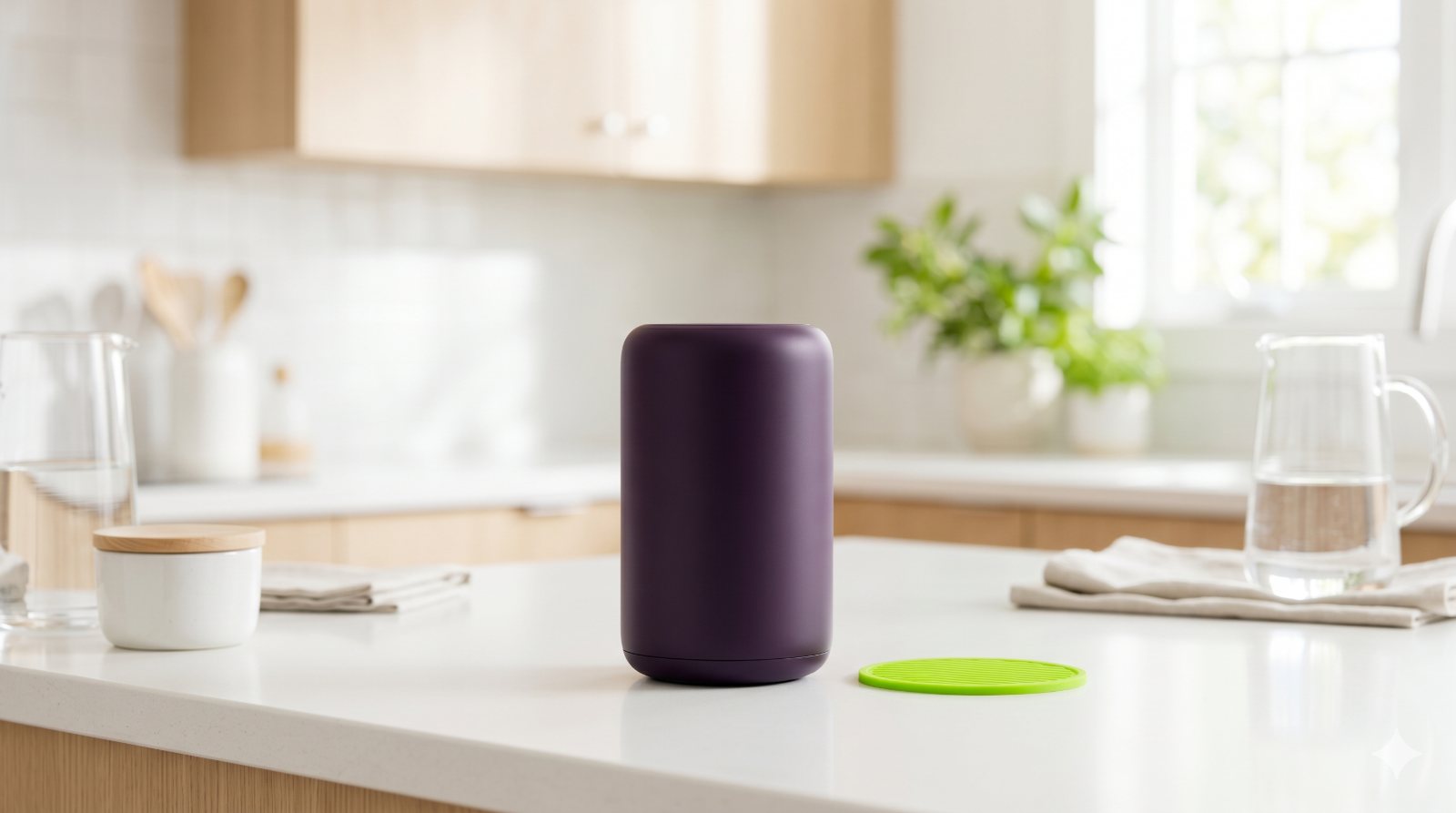
Aubergine smart speaker on a bright kitchen counter, representing voice and AI search.

What happened is a convergence. The large language models that power ChatGPT, Gemini, and the rest are now the same engines sitting behind the voice assistants people talk to in their kitchens and cars.

Are voice search and AI search still separate channels?

No. They have effectively become one. The same models that power ChatGPT and Gemini now power the voice assistants, so whether someone types a question into a chat box or asks it aloud, they are increasingly drawing answers from the same place. Your visibility in AI answers and your visibility in voice results are no longer two problems. They are one.

This is not a fringe behaviour. By most industry estimates, voice now accounts for roughly a quarter of searches, and for local questions such as "find a good dentist near me" or "what time does the shop close", its share is higher still. The interesting part is how people phrase these requests. Spoken queries run noticeably longer than typed ones, because people ask full questions rather than typing clipped keywords.

I have been making one version of this point since 2018, when I was already writing about long-tail, question-shaped queries for voice. I saw clearly that search was becoming conversational. What no one could have scripted back then was how quickly AI would move from novelty to a daily habit woven through ordinary life, and how completely it would carry that conversational query into the centre of how people interrogate the entire web. The keyword fragment has not died, but it is no longer the centre of gravity.

So what should a brand actually do about it?

Three things matter most, and none of them is a trick.

  • Write the way your customer asks.Map the real, complete questions a buyer would speak aloud, and answer each one directly in a tight block that a person or an assistant could read back without editing.
  • Earn authority, do not just claim it.When an assistant builds a single spoken answer, it chooses whose information to trust. That trust rests on consistent, corroborated signals about who you are across your own site and the wider web. One brand voice, one clear identity, repeated everywhere that matters.
  • Make the machines' job easy.Clean structure, fast pages, sensible markup. Crucially, do not quietly block the AI crawlers and then wonder why you are never cited. Being invisible to the assistant is the same as not existing to a growing share of your audience.

The thread running through all of it is the one I keep coming back to. These systems reward content that sounds like a person genuinely answering another person. Natural language, real helpfulness, no stuffing. The shift to AI and voice has not made marketing more robotic. It has, a little ironically, put a higher price than ever on treating your audience like people.

Want to be cited by the assistants your customers are actually asking?

I help brands get found, cited, and recommended in ChatGPT, Gemini, and Google AI Mode, before the advantage is gone. A discovery audit is a good way to find out where you stand.

Book a discovery audit
Read next
Analytical rigour

When the buyer never clicks: measuring brand visibility inside AI answers

Insights Analytical rigour

When the Buyer Never Clicks: Measuring Brand Visibility Inside AI Answers

There is a measurement problem quietly building underneath a lot of marketing programs, and it is the kind I find genuinely interesting, because it sits exactly where data integrity meets the new landscape.

By Sade Euzebe 7 min read
Woman reading on her phone in a bright modern interior, representing brand discovery inside AI answers.

Here is the problem. When ChatGPT, Gemini, Perplexity, or Google answer a buyer's question directly, your brand can shape that decision without ever registering a click. The recommendation happens inside the answer. The buyer hears your name, forms an impression, perhaps acts on it, and your analytics show nothing, because there was nothing to click. If you still judge performance purely by clicks and sessions, you are now blind to a real and growing slice of your own influence.

This is the same trap I have spent years pulling clients out of, in a different form. A dashboard reports what it can easily count, and what it can easily count is not always what matters. The discipline lies in refusing to mistake the convenient number for the real one.

How do you measure something that leaves no click behind?

You stop expecting perfect attribution and start building directional confidence from several imperfect signals together. Three are worth tracking.

  • Share of voice in the answers themselves.The most telling signal is how often your brand appears in AI-generated responses across a consistent set of high-value questions, and how that compares with competitors. The credible method borrows from election forecasting: define a representative set of a few hundred high-intent queries, run them repeatedly across the platforms, and record where your brand shows up as a mention or a citation. Aggregated over time, that repeated sampling gives a reasonably stable estimate rather than one noisy snapshot.
  • Mentions versus citations, platform by platform.Visibility is not uniform, and the platforms behave differently. Perplexity often links out to the sources it credits. ChatGPT names sources sometimes, though most queries end without a click. Gemini rarely passes referrer data at all. A brand can dominate one assistant and be nearly absent from another, so you have to read each on its own terms and test your most important prompts by hand.
  • The downstream tell: branded search.This one ties back to revenue. People often discover a brand inside an AI answer and then search for it directly to learn more, so a rise in branded homepage traffic alongside rising AI presence is a strong signal that the visibility is doing real work. It is indirect, but it is honest.

What does success actually look like here?

Not a perfect number. The realistic goal is directional clarity on whether your growing AI visibility is contributing to growth, read across several signals rather than one. That is not a compromise I am embarrassed by. It is what rigorous measurement looks like when the ground is still moving, and pretending otherwise would be the real failure.

If your reporting still stops at the click, you are not seeing a real part of how customers now find and choose you. Closing that gap, carefully and without overclaiming, is precisely the kind of work I take on.

Close the measurement gap before it widens.

I'll map your current visibility across the assistants your customers actually use, build a workable read on AI-influenced journeys, and help you act on what the data tell you. Without overclaiming.

Book a discovery audit
Read next
Customer insight

Cracking the customer code: why having perfect data was never the goal

Insights Customer insight

Cracking the Customer Code: Why Having Perfect Data Was Never the Goal

Somewhere along the way, a certain kind of marketer started treating perfect data as the goal. One source of truth, every touchpoint accounted for, attribution settled to the decimal. Often the pressure comes from a finance team that wants marketing held to the same standard as a ledger. It is an understandable impulse, and it is also a trap, because chasing it quietly costs you the thing you actually wanted, which was understanding your customer.

By Sade Euzebe 6 min read
Open notebook with a hand-drawn looping diagram, a coffee and a pen, representing reading marketing data with judgement.

Here is the more useful truth. The customer journey is a winding path, not a straight line. People see your ad, forget it, mention you to a friend, search for you three weeks later, read a review, and finally buy through a link they could never tell you about. No model captures that cleanly, and the harder you squeeze the data to make them confess a single tidy story, the more you distort what really happened.

So I work differently. I treat the numbers as the strongest evidence I have, not as gospel, and I pair them with the human story that the numbers cannot tell on their own.

How should you actually read your marketing data?

Read your data like an investigator, not an accountant. Marketers are not accountants, and they need not obsess over values to the decimal point. The job is to find the patterns that matter, not to reconcile every figure to the penny.

  • Find the patterns.Where is demand concentrating? Which segments behave differently from the ones you assumed mattered?
  • Follow the leads.When something spikes or sags, treat it as a clue. Form a hypothesis and go looking for the why.
  • Connect it to the business.A trend means something only once you know what it is doing to revenue, to acquisition cost, and to the quality of the customers you bring in. A rise in clicks is not a result. A rise in genuinely new customers who stay is a result.

Why do the numbers alone never give you the full picture?

Because the quantitative tells you what is happening, while only the qualitative tells you why. You need both, held next to each other. So once the data have pointed you somewhere, go and listen to actual people.

  • Surveyssurface what customers think they want.
  • User testingshows you where they actually struggle.
  • Conversations with prospectswho almost bought, and did not, tell you what really stopped them.

That is where you discover the "friction" your funnel flagged is really a pricing fear, or that the feature you deprioritised is the one people rave about.

None of this requires perfect data. It requires honest data, read with judgement, and the humility to check your assumptions against real human beings. Make sense of the data, and treat your audience like people. Everything else is decoration.

If your dashboards are technically immaculate and you still cannot say with confidence why your best customers chose you, that gap is exactly where I work.


Honest data, read with judgement.

If your dashboards look fine and your decisions still feel uncertain, we should talk. An audit usually surfaces three or four moves that change the story.

Book a paid search & growth audit
Read next
New customer acquisition

VIP treatment: why your best audience is the one you already have

Insights New customer acquisition

VIP Treatment: Why Your Best Audience Is the One You Already Have

Most accounts I audit are quietly spending a fortune to win people they already have. The campaigns optimise toward whoever is cheapest to convert, and the cheapest people to convert are very often existing customers, who were going to come back anyway. It looks like growth on the dashboard. It is mostly applause for work you did not need to pay for twice.

By Sade Euzebe 5 min read
Independent shopkeeper handing a wrapped parcel to a returning customer, representing customer loyalty and first-party data.

The fix is not complicated, though it does take intent. You treat your existing customers and your genuinely new prospects as different audiences, with different jobs to do, and you stop letting the platform blur them together.

How do you get more from the customers you already have?

This is where first-party data earn their keep. Your customer lists, used well through tools like Customer Match, let you speak to people who already know you with messages that fit the relationship.

  • Re-engage the ones who drifted.People who bought once and went quiet do not need an introduction. They need a reason to come back, ideally one that acknowledges the history you already share. That is a different message from the one you send a stranger.
  • Recognise your high-value customers as high-value.Repeat buyers should not receive the same generic prompt as a first-time visitor. Segment them, and give them something that reflects their worth to the business: early access, genuine recognition, an offer that is actually good.
  • Welcome newcomers as newcomers.Hold a clean line around acquisition. If you want to grow, you have to know the spend aimed at new customers is reaching new customers, with your existing base deliberately excluded, so you are not paying to retarget loyalty you already had.

There is a measurement reward here too. Once you stop letting "new" and "returning" sit in one undifferentiated bucket, your numbers start telling you the truth about where growth is really coming from. That clarity is worth as much as the media efficiency.

Does this still work in 2026, after the changes to tracking?

Yes, and arguably better, though the ground has shifted. First-party data are more valuable than they have ever been, precisely because the third-party signals everyone leaned on for years have degraded. That value comes with responsibility. Consent, transparency, and clean data handling are not box-ticking. They are the foundation of being allowed to do this at all, and of the trust that makes people open your emails in the first place. Use the data because you have earned the right to, and use them to be more relevant, not more intrusive.

That is the whole philosophy in miniature. The data tell you who your most valuable people are. Treating them like people, rather than line items to be re-converted, is what turns that knowledge into loyalty.

Stop paying twice for the customers you already have.

I'll help you tell new and returning apart cleanly, put your first-party data to proper use, and aim your new-customer spend at people who actually are new.

Book a paid search & growth audit
Read next
AI-driven discovery

Voice, chat, and the collapse of the search box

About

I'm Sade. (pronounced "Shah-day You-Zee-Bee")

Paid search and growth consultant, based in Toronto. I help ambitious brands grow on numbers they can trust.

Sade Euzebe, paid search and growth consultant, Toronto
Based inToronto · serving Canada & the U.S.
Credentials
  • MSc, Global MarketingUniversity of Liverpool
  • BSc, Management StudiesUniversity of the West Indies
  • Google UX DesignProfessional Certificate
  • Social Media MarketingCertificate, George Brown College
  • Google Ads & Microsoft AdsCertified
The story

Over a decade in digital marketing, and one constant way of working.

I started in 2013, moved into search engine marketing in 2016, first running Google Ads for non-profits across North America and Australia, and went on to work with hundreds of revenue-focused businesses in Canada and the U.S. I've been the sole search specialist at advertising agencies and the senior search manager at others, and most recently I've led paid search and AI-driven discovery for a performance marketing agency, managing over $1M a month in ad spend and the systems that make that sustainable.

What's stayed constant across all of it is a way of working: get the data right, then treat the audience like people.

The full-funnel advantage

I don't just drive the click. I understand what happens after it.

Before I specialised in paid search, I trained as a visual artist and UX designer, and I still think like one. It means I don't stop at the ad. I think about the landing-page experience, the conversion path, and the actual human on the other side of the click. That's why my campaigns tend to acquire the right customers, not just the cheapest conversions. See my design work →

Off the clock

I'm a proud Barbadian woman, happily settled in Toronto, equally excited by a new adventure and a quiet morning. I love colour, especially in fashion, and I'm genuinely committed to physical and mental wellness (teenage me would not believe I became a health nut).

I bring that same belief into my work: that what we build should improve people's experience, not interrupt their wellbeing.

How I operate

Integrity isn't negotiable. Transparency is the default.

You'll always know where things stand: no guessing, no spin, no convenient version of the numbers. I won't blindly trust a single platform's figures before scaling spend, because I care about the accuracy of the results I report.

The relationships I value most are built on evidence and trust, and they tend to last.

Book a paid search & growth audit
Work with me

Let's talk.

Most engagements start with an audit. Tell me a little about your brand and what's prompting the search, and I'll come back with an honest read on whether, and how, I can help. I take on a limited number of clients, so I'm candid about fit early.

Step 1 of 3 · About you

The basics.

Please share your name.
A company name helps me understand context.
Optional. Strip the https://, clean reads better.
A valid email so I can reply.
Step 2 of 3 · Scope

Approximate monthly ad spend.

This helps me understand the scale of the work and whether I'm the right fit before we talk.

Select a range to continue.
Step 3 of 3 · Context

What's prompting you to reach out?

A short, well-formed message carries more weight than a long one.

Thank you, message received.

I'll come back to you within two business days with an honest read on fit. If I'm not the right person, I'll tell you, and point you somewhere better.